
Recharge Software Cost in India: What Actually Decides the Price
Ask five companies for a recharge software quote and you will get five very different numbers. Listings on B2B marketplaces start at a few thousand rupees a month and go up to several lakh for full source code. Both can be "recharge software". The difference is in what sits behind the login screen.
This guide breaks the price into its real parts, so you can compare quotes properly and avoid the costs that only appear after launch.
1. What you are buying: a rental, a brand, or the code
| Model | What you get | What it means for cost |
|---|---|---|
| Shared or SaaS panel | Login on the provider's platform | Lowest entry cost, but limited control and the provider's branding |
| White label | Your brand, your domain, your app on the provider's servers | One-time setup plus a yearly or monthly renewal |
| Source code | The code itself, installed on your server | Highest one-time cost; you pay for hosting, updates and developers yourself |
If you are not sure which one fits, our comparison of white label, source code and recharge API walks through it.
2. The parts that change the price
- Number of levels. A simple admin plus retailer panel is cheaper than a full master distributor, distributor and retailer network with separate commission slabs.
- Services included. Mobile and DTH are the base. Bill payments, FASTag, money transfer or other services each add integration and testing work.
- Android app. A branded app on the Play Store needs design, a developer account, updates for new Android versions and policy changes.
- API routing. Software that can switch between more than one recharge API when one is slow costs more to build, but saves money every day it runs.
- Payment gateway. Letting retailers add money online through a gateway is extra setup, and the gateway charges its own fee per transaction.
- Hosting. A small panel runs on a basic server. A network doing thousands of recharges an hour needs a stronger server, backups and monitoring.
3. Costs that appear after you go live
Most budget surprises come here, not at purchase time.
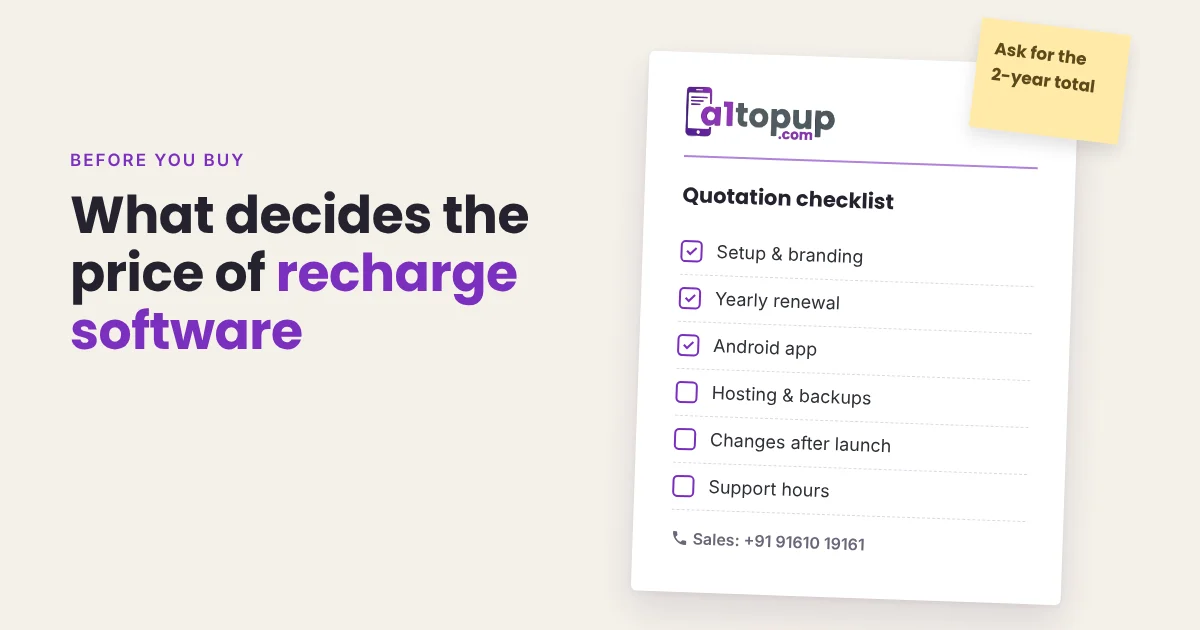
- Renewal. Ask what the yearly renewal is, and what stops working if you do not renew.
- SMS and WhatsApp. OTPs and alerts are paid per message on most gateways.
- Domain and SSL. Small, but yearly.
- Changes. New features, a new service or a design change after launch. Ask how they are charged: fixed price, hourly, or included.
- Your time. Slow support costs you retailers. That is a real cost even if it never appears on an invoice.
Pro tip: ask every vendor for the total cost for the first two years, not just the setup price. Cheap setups with expensive renewals are common.
4. Why the cheapest quote is often the costliest
A low price usually means one of three things: shared hosting that slows down at peak hours, no API backup when the main provider fails, or support that answers the next day. In recharge, a failed or pending transaction at 9 pm on a Sunday is when you need help most. If retailers move to another network because recharges fail, the savings on software are gone in a week.
5. How to compare two quotes
- Write down every service, level and app each quote includes.
- Ask for the renewal and change charges in writing.
- See a live demo with real transactions, not just screenshots.
- Ask who hosts the software and who has the backups.
- Ask for two or three existing clients you can call.
Before the demo, keep our feature checklist for multi recharge software open, so nothing important is missed.
Want a clear quote?
A1Topup has built recharge software and APIs since 2016. Tell us your network size and the services you want, and we will send a written quote with setup, renewal and change charges, so there are no surprises later. Message us on WhatsApp.
Frequently asked questions
How much does recharge software cost in India?
Is source code cheaper than white label in the long run?
What hidden costs should I ask about?
Have a question? Talk to our team
Related articles
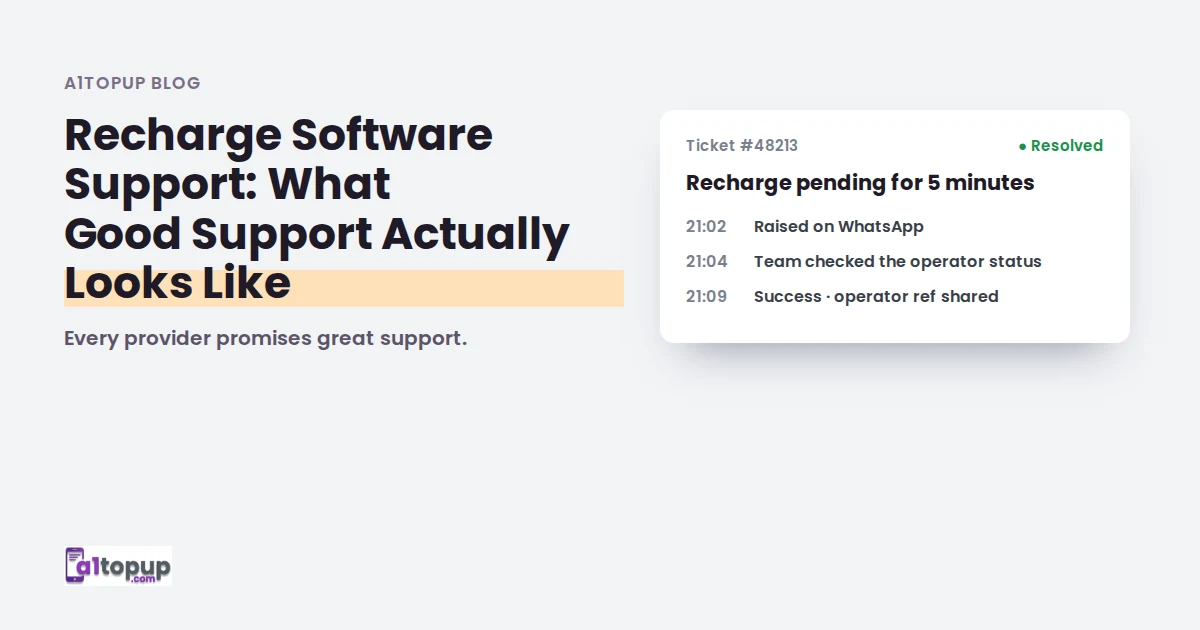
Recharge Software Support: What Good Support Actually Looks Like
Every provider promises great support. Five things to check before you believe it.
Read more →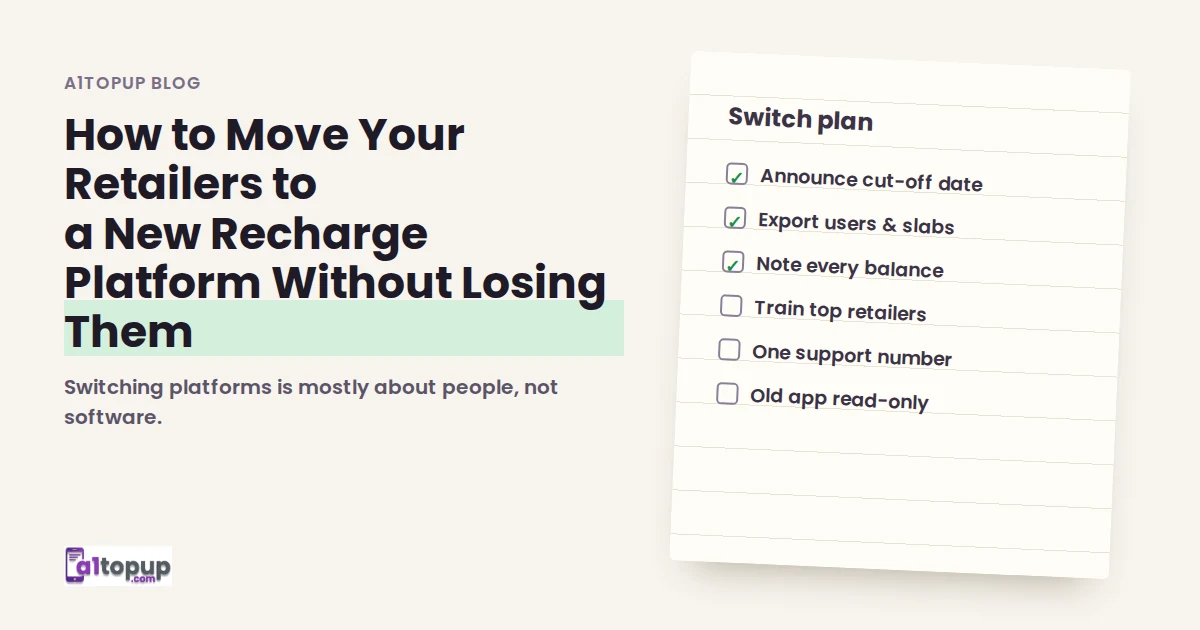
How to Move Your Retailers to a New Recharge Platform Without Losing Them
Switching platforms is mostly about people, not software. A week-by-week plan that keeps retailers with you.
Read more →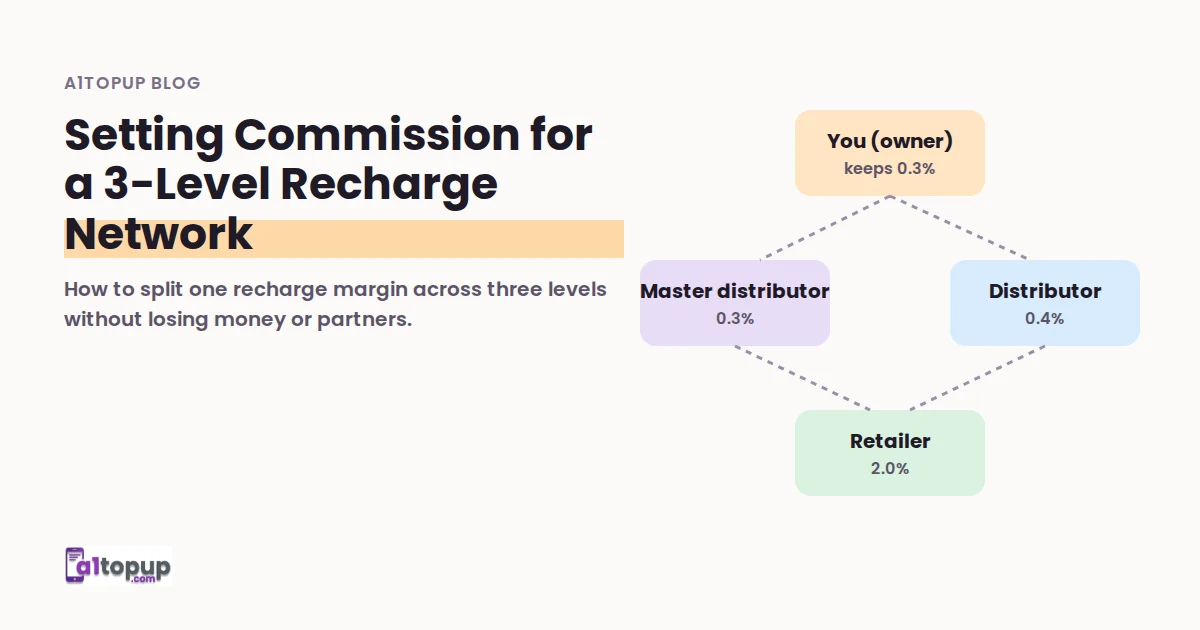
Setting Commission for a 3-Level Recharge Network: A Worked Example
How to split one recharge margin across three levels without losing money or partners.
Read more →