
Recharge Software Support: What Good Support Actually Looks Like
Key takeaways
- Ask who answers, not just how fast
- Urgent and normal issues need different paths
- Updates and downtime should be announced, not discovered
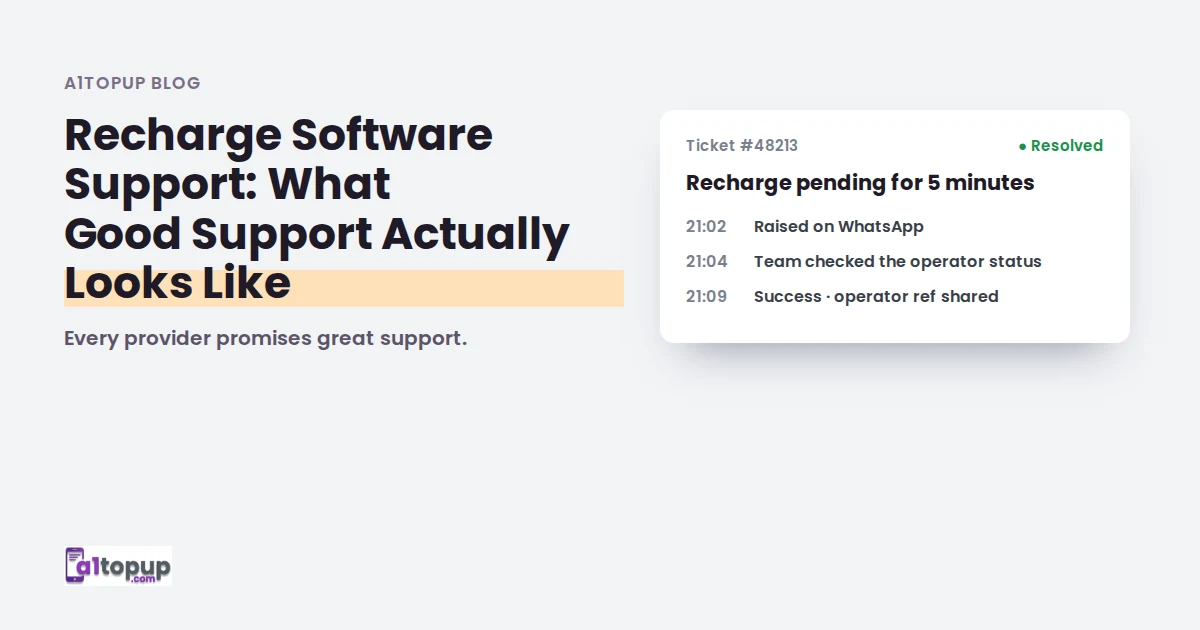
Software is easy to demo. Support is not, and it is what you will remember a year after buying. When a recharge is stuck at 9 pm and twenty retailers are calling you, the quality of your provider's support is the only feature that matters.
Five things good support has
- A real person who knows the product, not only a ticket form.
- Clear hours and a separate path for urgent issues.
- Phone and WhatsApp both, for quick questions and urgent calls.
- Announced updates, so you are not surprised by changes.
- Written answers for repeat questions, so your team can help itself.
During a demo, send the provider a support question on WhatsApp and time the reply. It tells you more than any brochure.
Questions to ask before you buy
- Who will I talk to when something breaks?
- What happens on Sundays and holidays?
- How do you handle a pending recharge complaint?
- Where are updates and downtime announced?
Conclusion
Ask these questions to every provider, including us. At A1Topup you get phone and WhatsApp support from our team in Hyderabad and Lucknow, and updates on our WhatsApp channel. Talk to us or try the free demo.
Frequently asked questions
What response time should recharge software support have?
Is WhatsApp support enough?
What should I ask a provider about support?
Have a question? Talk to our team
Related articles

How to Move Your Retailers to a New Recharge Platform Without Losing Them
Switching platforms is mostly about people, not software. A week-by-week plan that keeps retailers with you.
Read more →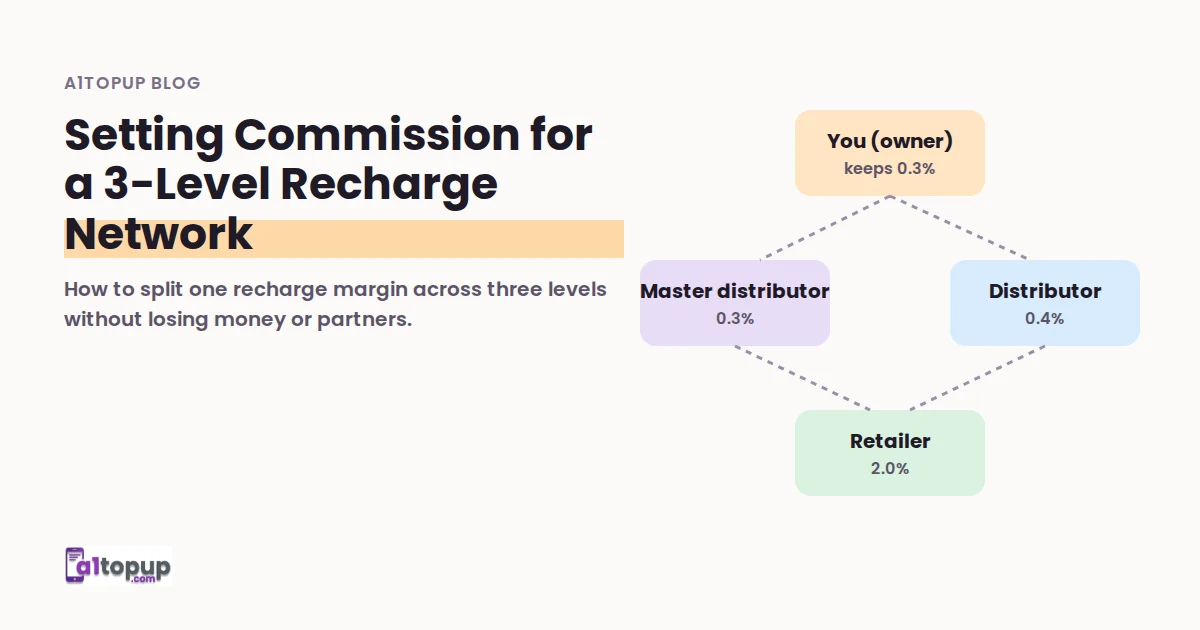
Setting Commission for a 3-Level Recharge Network: A Worked Example
How to split one recharge margin across three levels without losing money or partners.
Read more →
WhatsApp Alerts for a Recharge Business: What to Automate First
Retailers already live on WhatsApp. Five alerts worth automating, and three you should never send.
Read more →