
Recharge Plan API: Why Showing the Right Plan Means Fewer Failed Recharges
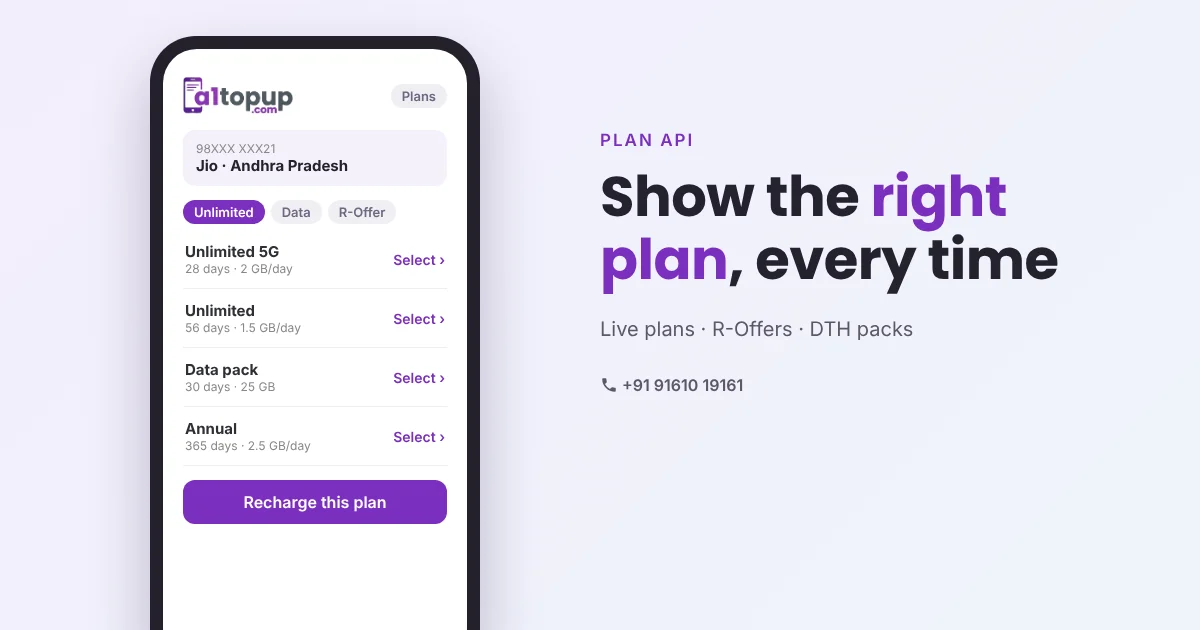
Prepaid tariffs change often, and they differ by operator and sometimes by circle. Customers rarely remember amounts. They remember "unlimited, 28 days, 2 GB a day". The retailer then types what they think the price is.
If the amount is wrong, one of three things happens: the recharge fails, it goes through as a different plan, or it goes through as plain talktime. All three end in a complaint at the counter.
What a plan API does
A plan API returns the current plans for an operator and circle, so your app can show them as a list. The retailer or customer picks the plan, and the exact amount goes into the recharge request.
A good plan API also gives:
- R-Offers: special offers for one particular number, which are often what the customer actually wants
- DTH plans and customer info: current pack, balance and next due date for a subscriber ID
- Operator and circle detection from the number, so the right plan list loads by itself
- The same JSON shape for every operator, so you write the screen once
Where it helps most
| Screen | What changes |
|---|---|
| Retailer app | Faster counter service, fewer wrong amounts |
| Customer app | Plans browsed like a shop, higher average recharge |
| DTH recharge | Customer sees their pack and due date before paying |
Things to check in a plan API
- How fresh the plan data is, and whether R-Offers are live lookups
- Daily hit limits and what happens when you cross them
- IP whitelisting and KYC, so your key cannot be misused
- Whether failed lookups are charged
- A usage report you can check yourself
Small detail, big effect: cache the plan list for a short time on your server. Repeat lookups for Jio in the same circle within a few minutes do not need a fresh call every time.
Common mistakes when adding plans to an app
- Showing every plan at once. A list of eighty plans is as bad as none. Group them by tab: unlimited, data, top-up, special offers.
- Hiding validity and data. Customers choose by "how many days" and "how much data", so show those before the price.
- Not refreshing after a tariff change. When operators revise prices, an old cached list causes exactly the failures you wanted to avoid. Keep the cache short.
- Forgetting DTH. DTH customers often do not know their pack price either. A customer info lookup by subscriber ID answers that before payment.
Tariff revisions are when this matters most. A business with a live plan list keeps working correctly the same day, while one typing prices from memory gets a wave of wrong-amount failures. Our article on tariff changes and the recharge business covers what to do at the counter.
Our Plan API
A1Topup's Recharge Plan API covers prepaid plans for Airtel, Jio, Vi and BSNL, R-Offers, DTH plans and customer info, with operator detection and bill fetch on the same login. Plans differ only by the number of hits per day. Pair it with our operator detection API so the right list loads before the retailer even asks.
Want to see the response format? Ask us on WhatsApp.
Frequently asked questions
What is a recharge plan API?
What are R-Offers?
Does a plan API reduce failed recharges?
Have a question? Talk to our team
Related articles
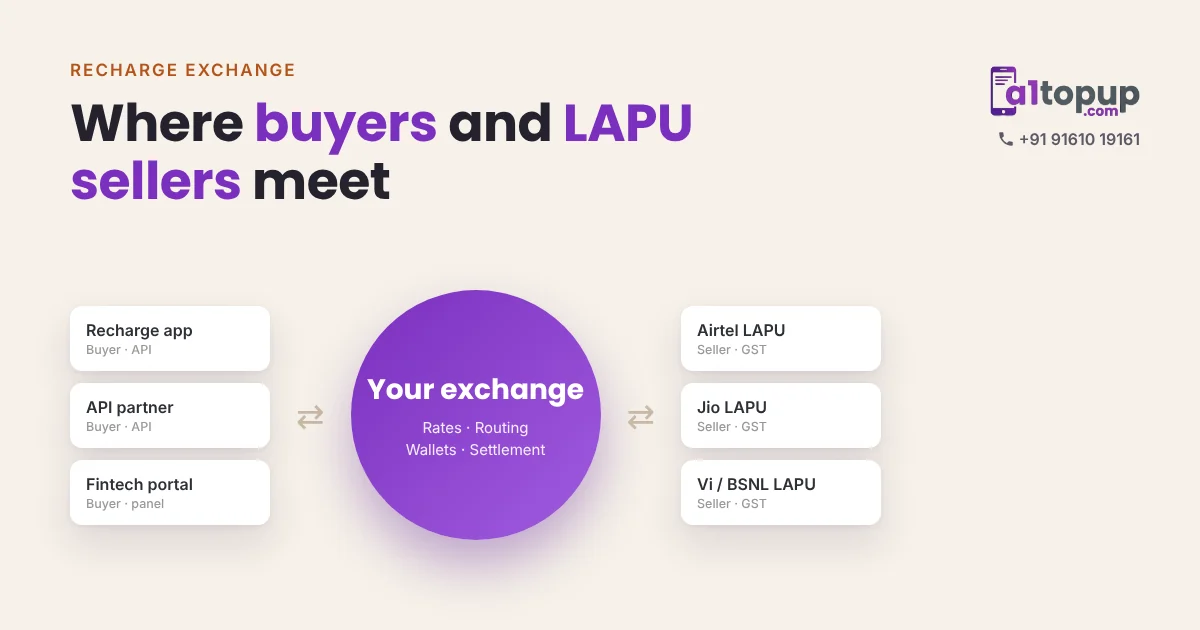
What Is a Recharge Exchange? How Buyers and LAPU Sellers Meet on One Portal
Some businesses have recharge demand. Others have operator stock. A recharge exchange puts both on one portal and keeps the margin in between.
Read more →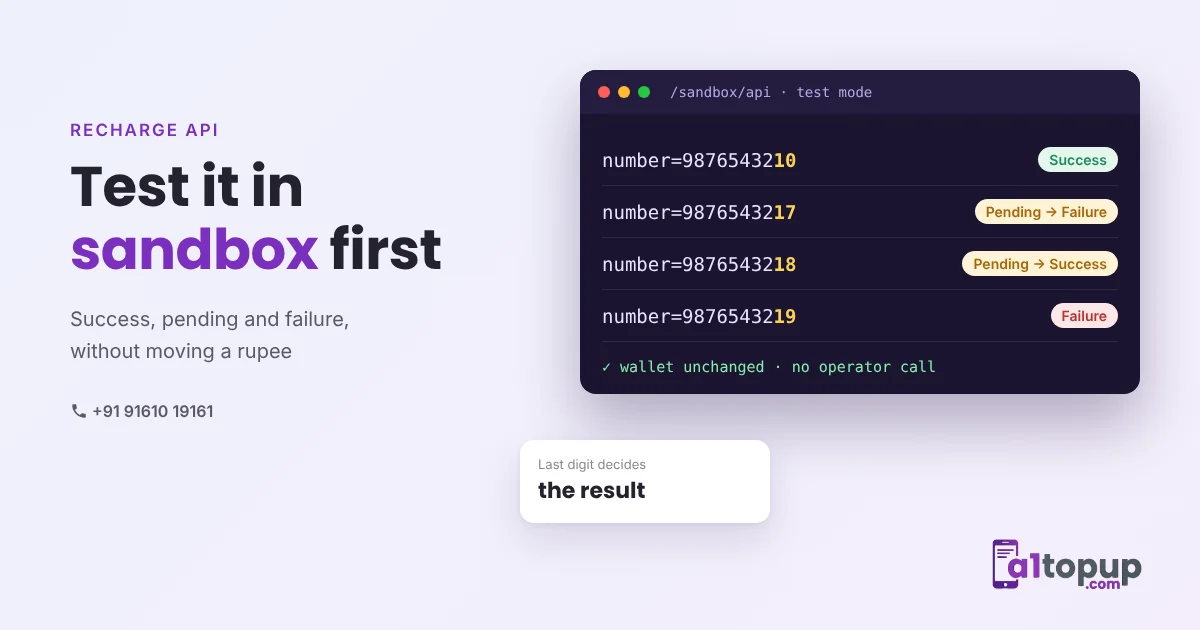
Testing a Recharge API in Sandbox: What to Check Before You Go Live
Most integration bugs show up on the first busy evening, with real money. A sandbox lets you find them on a quiet afternoon instead. Here is what to test.
Read more →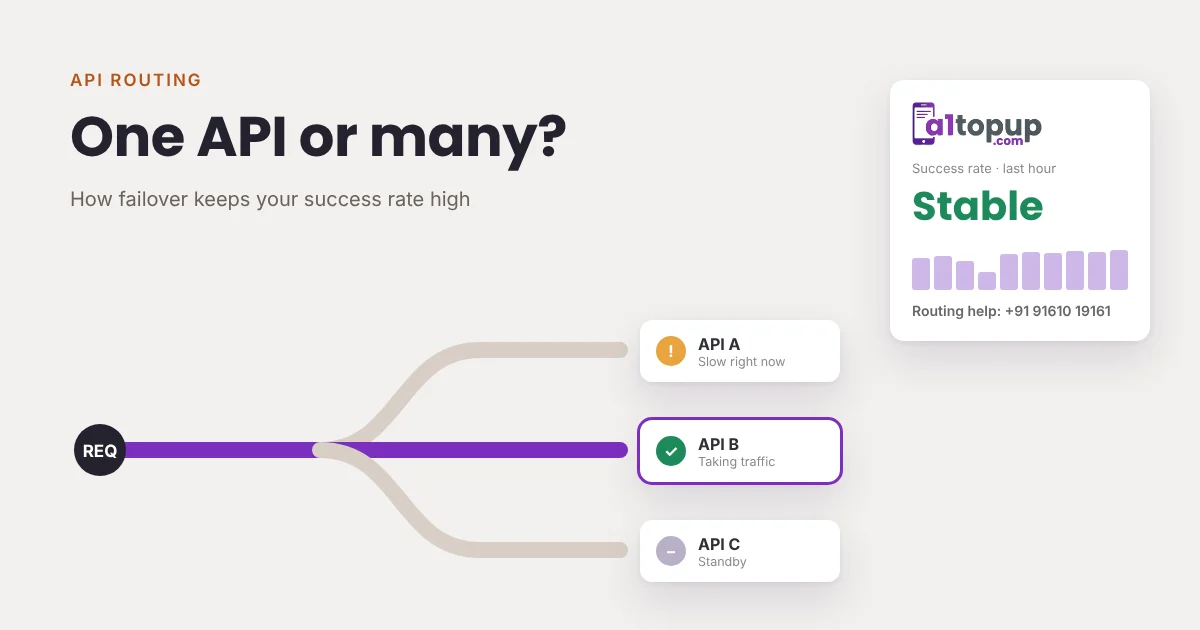
One API or Many? How Failover Keeps Your Recharge Success Rate High
When your only recharge API slows down, every retailer feels it. How routing and failover keep recharges going.
Read more →