
What Is a Recharge Exchange? How Buyers and LAPU Sellers Meet on One Portal
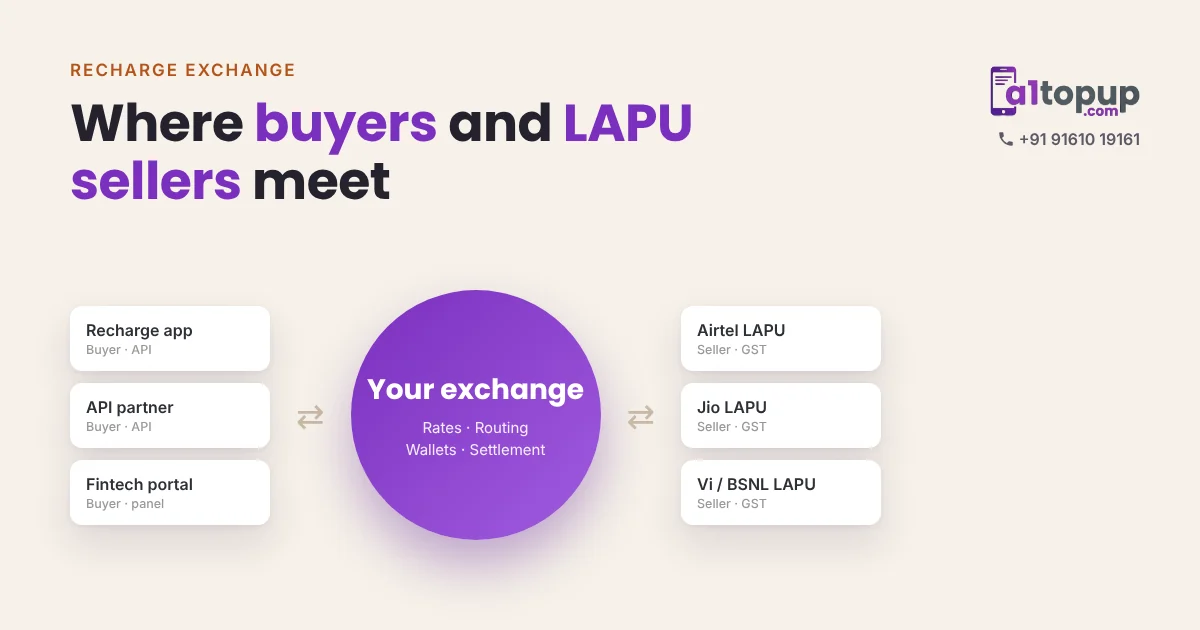
Talk to enough people in the recharge trade and you notice two groups with opposite problems. API businesses and app owners have plenty of recharge requests but depend on one or two upstream sources. Operator distributors have LAPU stock and want steady, predictable volume.
A recharge exchange is software that lets one business sit between the two: buyers send recharges in, sellers fulfil them, and the exchange keeps the rates, wallets and settlement straight.
How it works, step by step
- A buyer sends a recharge through the API or a web panel. Their wallet is checked first.
- The exchange picks a seller who has stock for that operator, using your rules: priority, rate or success rate.
- The seller fulfils it from their LAPU and the result comes back to the exchange.
- Wallets update. On success the buyer is debited and the seller's earnings go into a ledger. On failure the buyer is refunded.
- Settlement with sellers happens on the schedule you agree, with a statement both sides can see.
The difference between what buyers pay and what sellers earn is your margin, on every successful recharge.
Who it suits
| You are | What an exchange gives you |
|---|---|
| An API provider | Your own seller network, so you are not tied to a single upstream source |
| A large distributor | A way to sell your contacts' stock to API buyers, with clean records |
| A recharge app or platform | Direct access to stock at rates you negotiate yourself |
What the software must handle
- Separate buying and selling rates per operator, with groups for special buyers or sellers
- Routing rules you can change from the admin panel, not by calling a developer
- Pending discipline: a pending recharge stays with one seller until it is final. Moving it to another seller is how double recharges happen
- Complaints tracked to the seller who handled the recharge
- Ledgers and reports by operator, buyer and seller: volume, success rate and margin
- Approvals and limits for every new buyer and seller
The part people underestimate: trust
An exchange only works if both sides believe the numbers. Sellers want to see exactly what they fulfilled and what they are owed. Buyers want refunds on failures without chasing anyone. Good software makes those statements available to each side, so the late-night calls stop.
Work only with GST-registered sellers who can invoice their stock, and agree rates and payment terms in writing before the first order. If you are a seller yourself, our page on selling recharge stock to A1Topup explains how we do it.
Exchange or plain recharge software?
If you only resell recharges to your own retailers, normal B2B recharge software is enough. An exchange makes sense when you want to bring in sellers as a second side of the business. Our LAPU vs recharge API article explains the stock side in more detail.
See it working
We build recharge exchange software under your brand, with buyer and seller panels. Ask for a demo on WhatsApp.
Frequently asked questions
What is a recharge exchange?
How does the exchange owner earn?
Can a pending recharge be moved to another seller?
Have a question? Talk to our team
Related articles
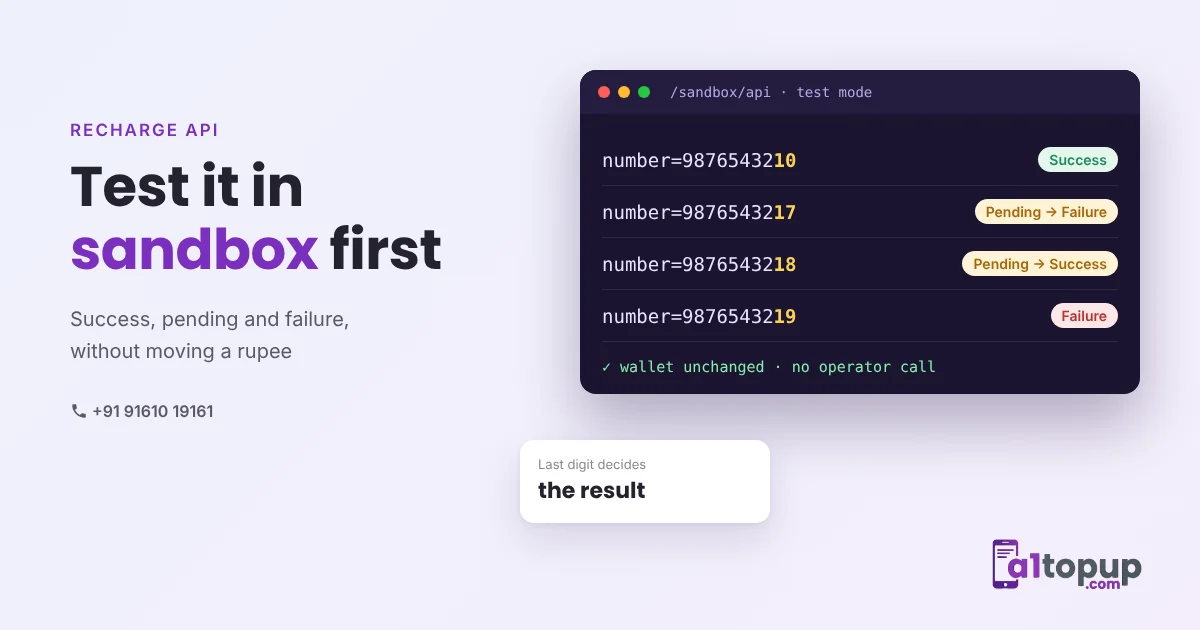
Testing a Recharge API in Sandbox: What to Check Before You Go Live
Most integration bugs show up on the first busy evening, with real money. A sandbox lets you find them on a quiet afternoon instead. Here is what to test.
Read more →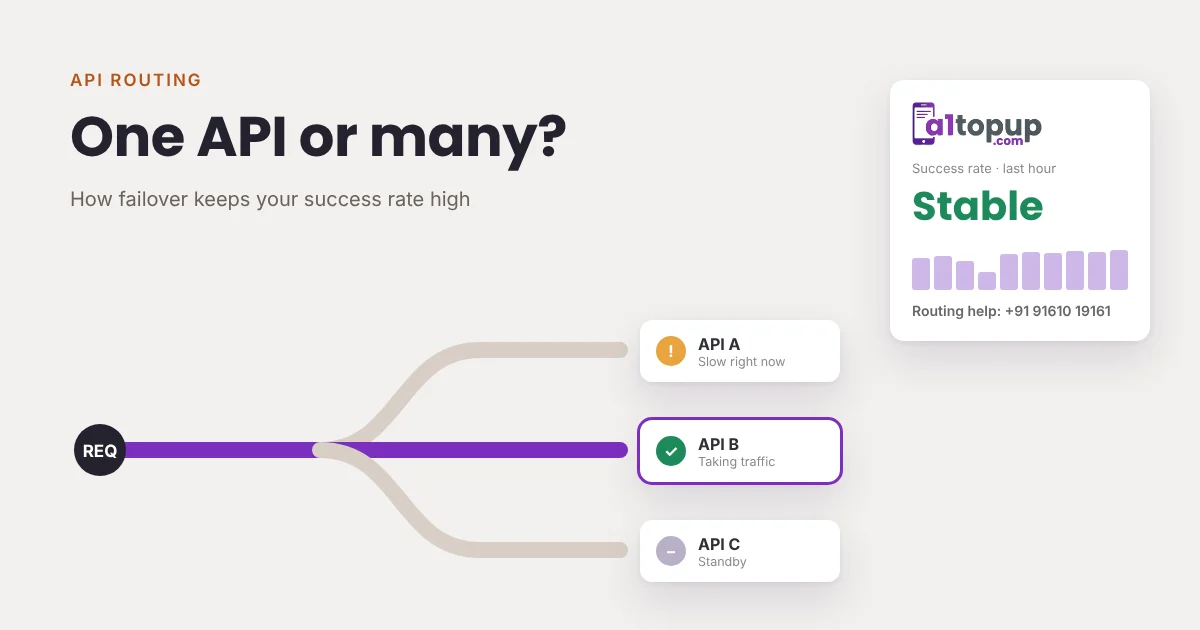
One API or Many? How Failover Keeps Your Recharge Success Rate High
When your only recharge API slows down, every retailer feels it. How routing and failover keep recharges going.
Read more →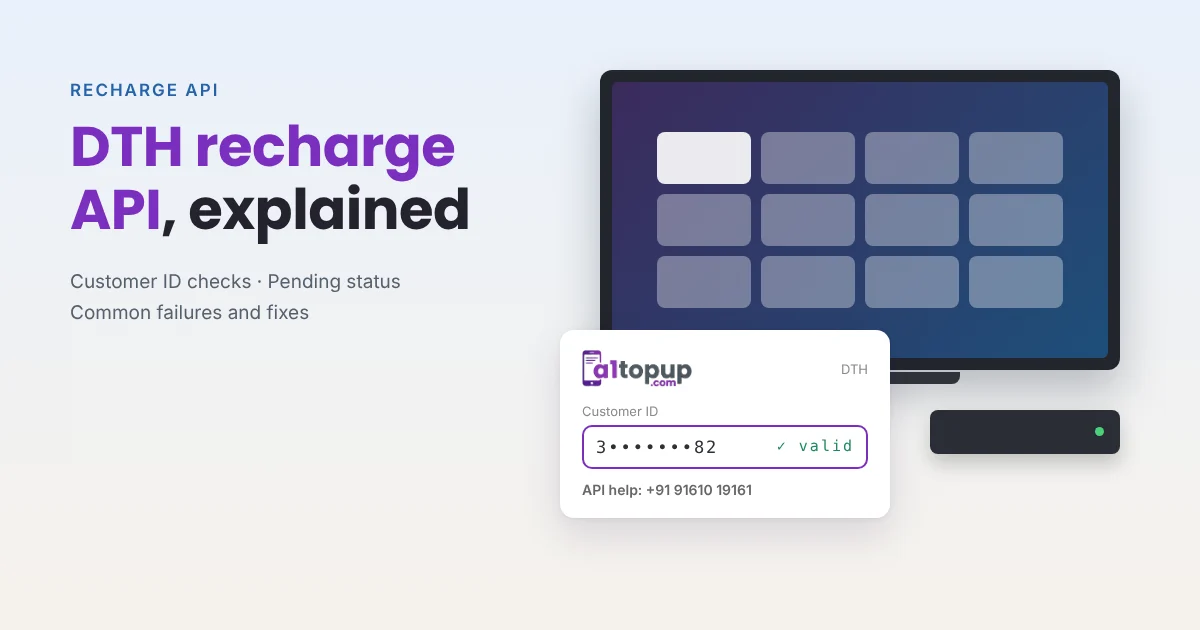
DTH Recharge API: Operators, Customer ID Checks and Common Failures
DTH recharges fail for different reasons than mobile. How to check customer IDs, handle pending status and cut failed DTH recharges.
Read more →