
LAPU vs Recharge API: Which Is Better for Your Recharge Business?
Key takeaways
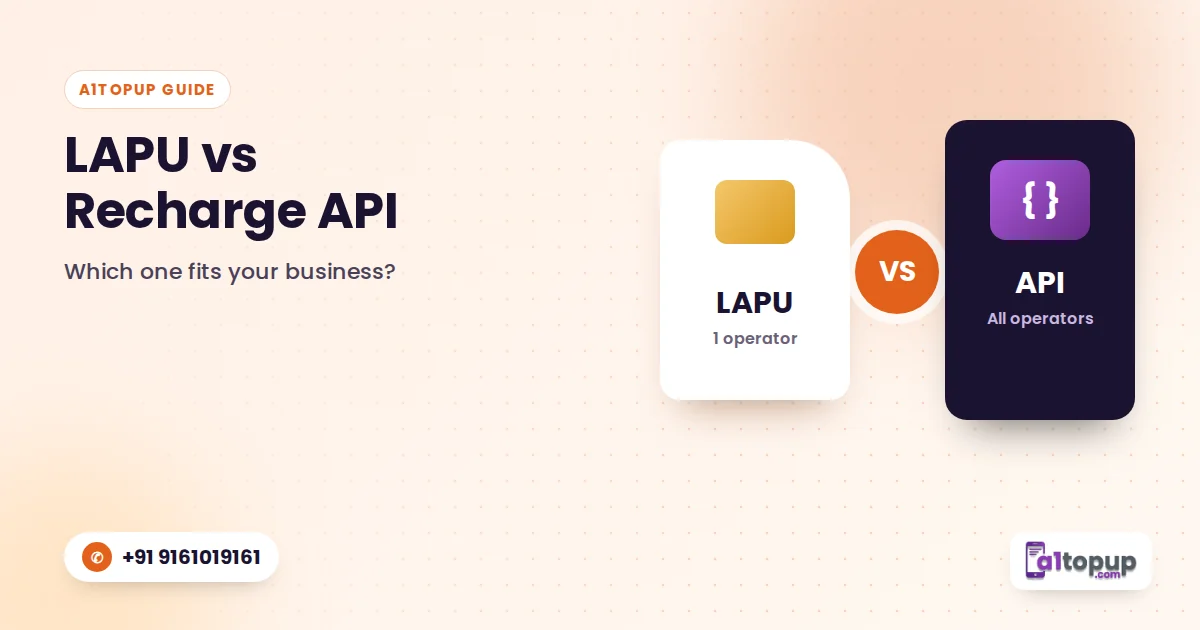
- LAPU covers one operator per SIM; an API covers all operators from one wallet
- APIs add DTH, bills and automatic status reports
- Move step by step: keep LAPU while you test the API
Before recharge APIs became common, most shops used LAPU SIMs. Many still do. If you are deciding between the two, this comparison will help.
What is LAPU?
LAPU stands for Local Area Pre-Paid Unit. It is a special SIM given by an operator's distributor to a retailer. The retailer loads balance on it and sends recharges to customers of that one operator.
What is a recharge API?
A recharge API is a software connection. From one wallet, your app, website or software can recharge all major operators, DTH and often bill payments, and get the result back automatically.
Start by moving your busiest operator to the API and compare speed for a week before moving everything.
Side-by-side comparison
| LAPU | Recharge API | |
|---|---|---|
| Operators | One operator per SIM | All major operators from one wallet |
| Balance | Separate balance on each SIM | One wallet for everything |
| Services | Mobile recharge | Mobile, DTH, bills, FASTag and more |
| Automation | Manual, phone based | Automatic, with status callbacks |
| Scaling | More SIMs and phones | More users on the same platform |
| Best for | Small single-operator shops | Apps, portals and growing networks |
When LAPU still makes sense
If you only sell one operator in a small area and have a strong local distributor, LAPU can work. But you manage separate balances and cannot offer DTH or bills from the same SIM.
Why most growing businesses move to an API
- One wallet instead of many SIM balances
- Every operator and service in one place
- Automatic reports and commission tracking
- Easy to add retailers and distributors
Do you need a developer?
For a direct API, yes. If you do not have one, white label recharge software gives you a ready app and portal with the API already connected.
Cost comparison
LAPU needs a separate SIM, balance and often a separate phone for each operator. As you add operators, your money gets split across many balances. With an API, one wallet covers every operator and service, so the same working capital goes further.
Speed and customer experience
With LAPU, the shopkeeper usually types the recharge manually on the SIM's menu or app. With an API-based app, the retailer selects the operator (or it is detected automatically), enters the amount and gets the result on screen with a transaction ID. Fewer typing mistakes means fewer wrong recharges.
Moving from LAPU to an API
- Keep your LAPU for a few weeks while you test the API platform.
- Start with your busiest operator on the API and compare speed.
- Add DTH and bill payments, which LAPU cannot offer.
- Once you are comfortable, move most of your volume to the single wallet.
Conclusion
LAPU is fine for a single-operator counter. For a multi-operator business that wants to grow, a recharge API is the better base. See our API commission list or book a demo.
Switching from LAPU?
See our recharge API or get a ready app with the API inside.
Frequently asked questions
What is the full form of LAPU?
Is a recharge API better than LAPU?
Can I use both LAPU and an API?
Have a question? Talk to our team
Related articles
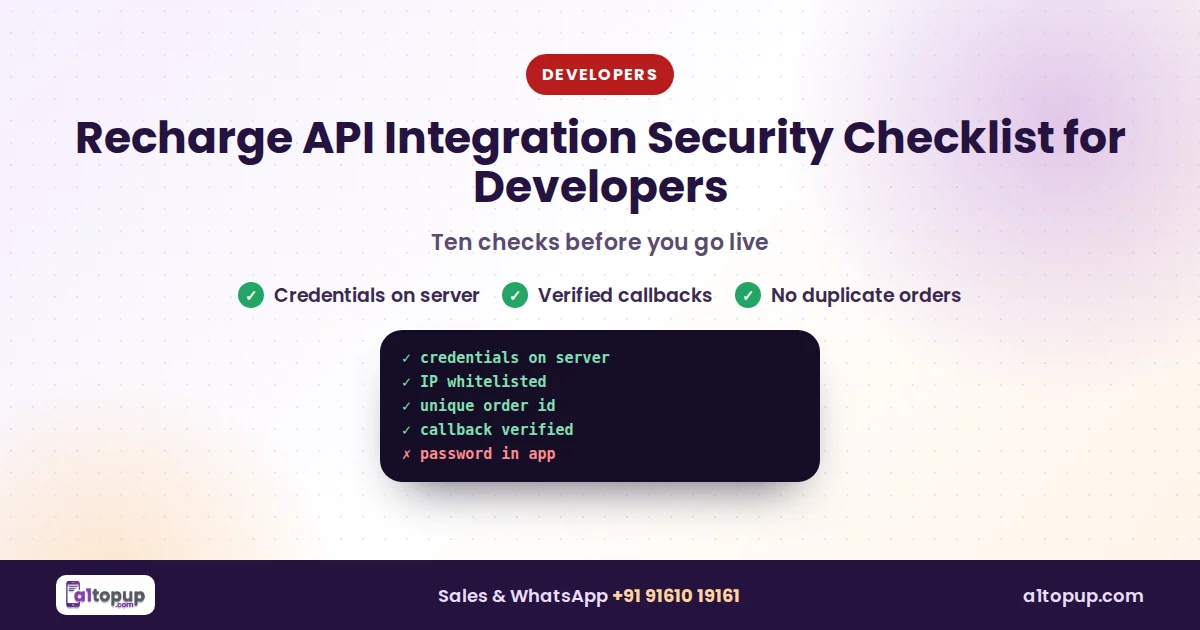
Recharge API Integration Security Checklist for Developers
Recharge APIs move real money. Ten checks to run before your integration goes live.
Read more →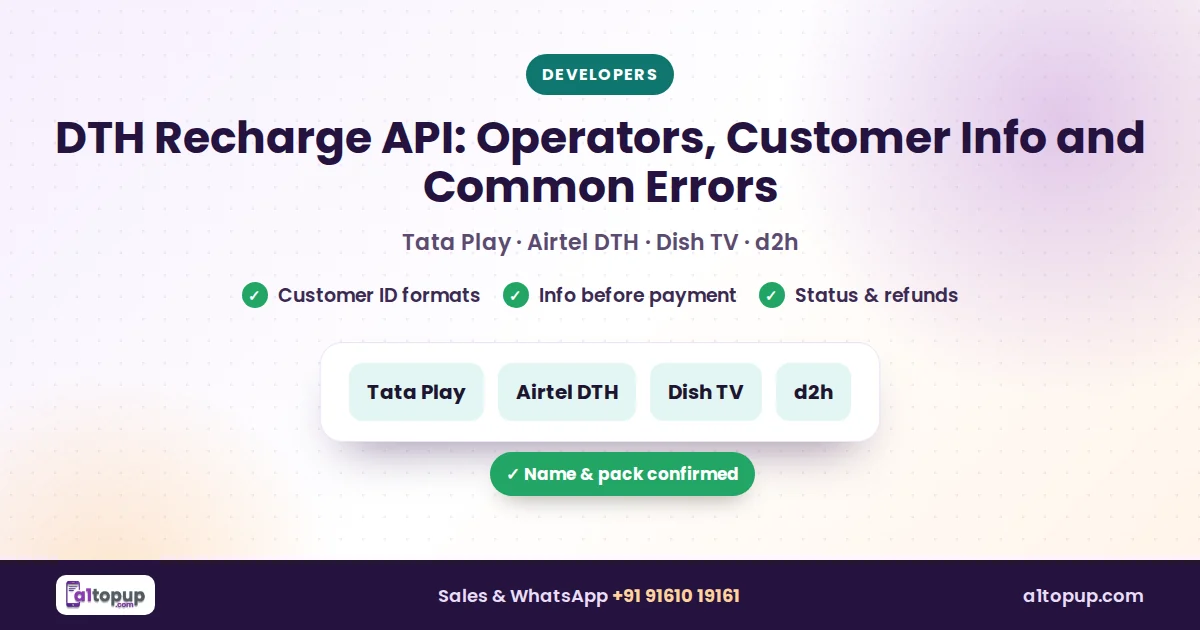
DTH Recharge API: Operators, Customer Info and Common Errors
DTH customers come back every month. Here is how the API side works and what usually goes wrong.
Read more →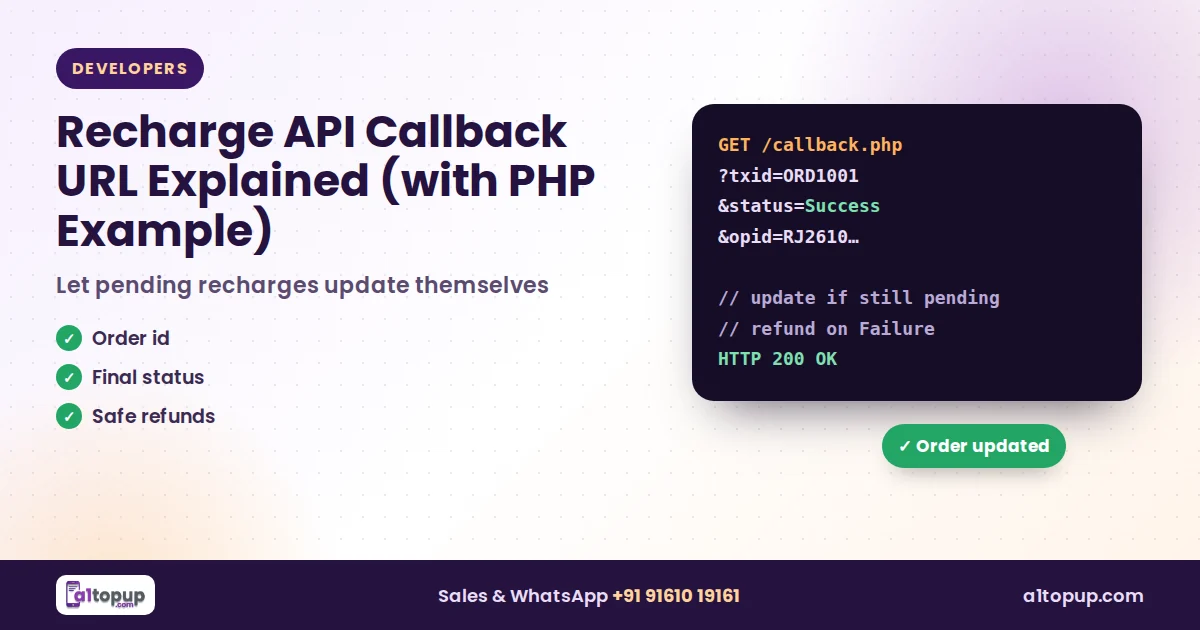
Recharge API Callback URL Explained (with PHP Example)
Pending recharges update themselves when your callback URL is set up right. Here is how it works, with a PHP example.
Read more →