
FASTag Recharge API: How It Works and How to Add It to Your Platform
Key takeaways
- A FASTag recharge goes to the bank that issued the tag
- Fetch the customer details with the vehicle number before paying
- Highway towns, transport hubs and truck owners are the natural customers
FASTag is one of those services people need urgently: they are about to leave on a trip and the balance is low. If your counter or app can recharge FASTag in a minute, you become the place they remember.
Here is how FASTag recharges work behind the scenes, and what to check before adding them to your platform.
How a FASTag recharge works
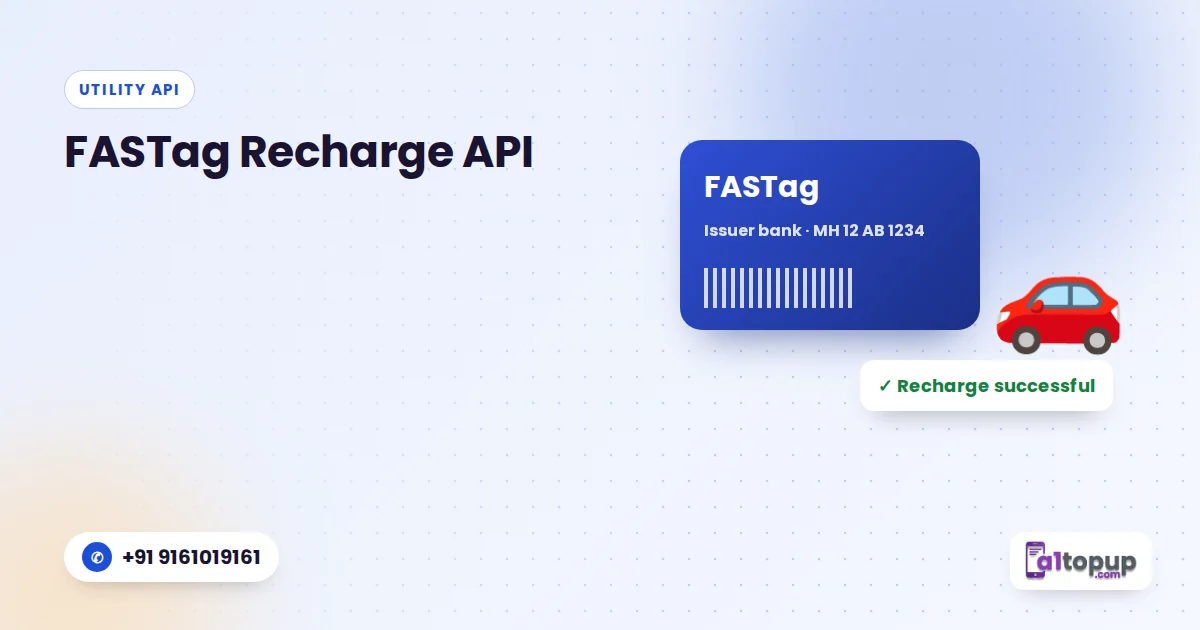
Every FASTag is issued by a bank, for example a public or private sector bank or a payments bank. A recharge is really a payment to that issuer for a specific vehicle. That is why the flow starts with the issuer and the vehicle number.
- Choose the issuer bank printed on the FASTag sticker.
- Enter the vehicle registration number (sometimes the wallet or customer id).
- Fetch the details: the customer name, and for some issuers the balance or limits.
- Pay the amount from your wallet.
- Get the final status and a reference number for the customer.
Why fetch before you pay
Fetching first shows the name linked to the tag. The customer can confirm it is their vehicle before money moves. It prevents payments to a wrong vehicle number, which are very hard to reverse.
Ask the customer to check the bank name printed on the FASTag sticker before you pay. Picking the wrong issuer bank is the most common reason a FASTag payment fails.
Who uses FASTag recharge at a counter
| Customer | Why they come to you |
|---|---|
| Truck and taxi owners | Frequent recharges, often for several vehicles |
| Families before a trip | Urgent top-up, no time to figure out an app |
| Older customers | Prefer paying cash at a trusted shop |
What to check before adding FASTag
- Which issuer banks are supported
- Whether the API fetches customer details before payment
- How the final status reaches your system (callback or status check)
- How failed payments are refunded to your wallet
- The commission or charge per FASTag transaction
Adding it to an existing recharge platform
If you already use a recharge API, FASTag usually works through the same wallet and similar request format, with the issuer and vehicle number as extra fields. On A1Topup software it appears as one more service in the retailer app. See the FASTag API page for details.
Conclusion
FASTag is a small service with loyal, repeat customers, especially near highways and transport hubs. Add it alongside mobile, DTH and bill payments, and your counter covers almost every regular payment a customer makes.
Add FASTag to your platform
Same wallet as mobile and DTH recharge.
Frequently asked questions
How does a FASTag recharge API work?
Why is the issuer bank important?
Can FASTag work from the same wallet as mobile recharge?
Have a question? Talk to our team
Related articles
BBPS Bill Payment API: How It Works and How to Add It to Your App
A simple guide to BBPS and bill payment APIs: bill fetch, payment and status, the bills you can collect, and how to add them to your platform.
Read more →
Utility Bill Payment Software: Complete Digital Solution
Streamline utility bill payments with advanced software. Manage electricity, gas, water, municipal taxes, and more from a single platform with A1Topup's utility bill software.
Read more →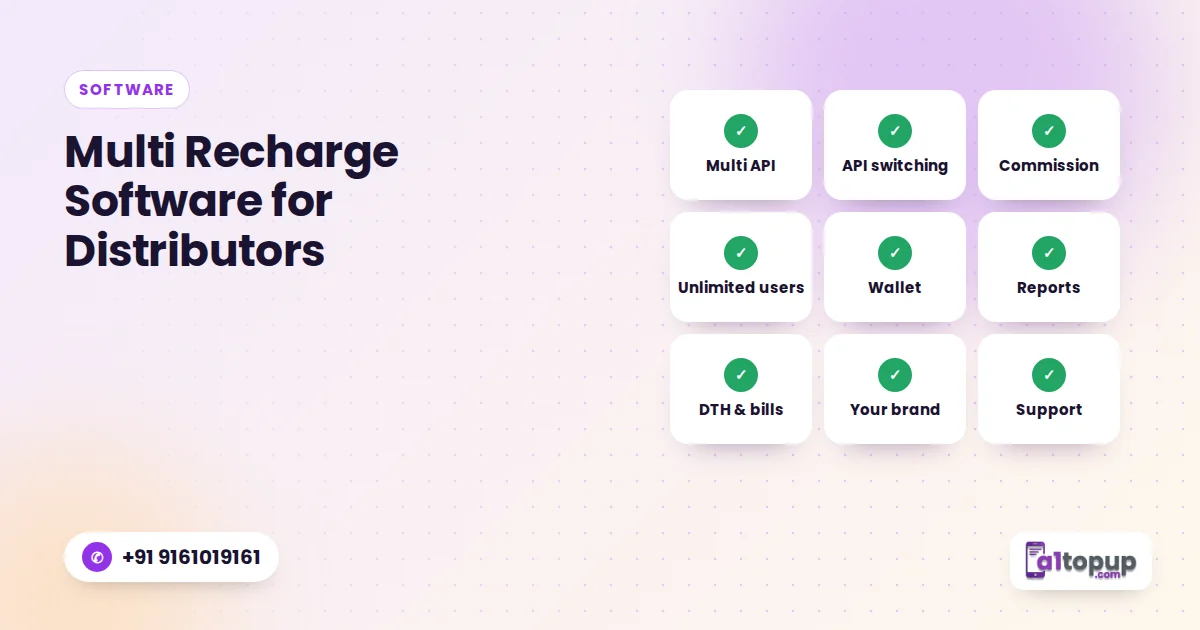
Multi Recharge Software for Distributors: 9 Features to Check Before You Buy
Nine features that separate recharge software that works on a busy Monday morning from software that only looks good in a demo.
Read more →