
Recharge API vs Recharge Portal
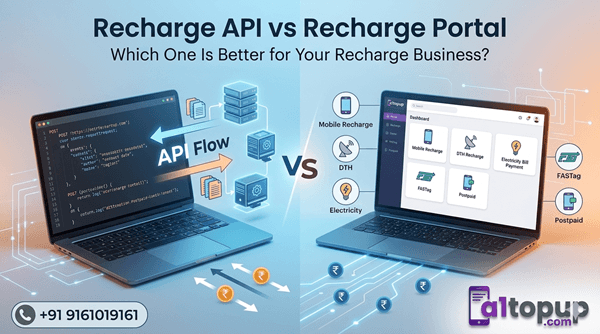
Recharge API vs Recharge Portal: Which One Should You Choose?
When starting a recharge business, one of the most important decisions you'll make is choosing between a recharge API and a ready-made recharge portal. Both solutions have their advantages and are suited for different business models. This comprehensive guide will help you understand the differences, pros and cons, and make the right choice for your business in 2026.
Quick Overview: API vs Portal
Recharge API
Application Programming Interface that allows you to integrate recharge functionality into your own website, app, or software.
For Developers & Tech-SavvyRecharge Portal
Ready-made website or platform where you can start accepting recharges immediately without any technical development.
For Non-Technical EntrepreneursSide-by-Side Comparison
| Parameter | Recharge API | Recharge Portal |
|---|---|---|
| Definition | Interface to connect your own application with recharge services | Ready-made website/platform for recharge operations |
| Technical Skills Required | High - Developer needed | None - Ready to use |
| Time to Market | 2-8 weeks (development + integration) | 24-48 hours |
| Initial Cost | ₹50,000 - ₹5,00,000+ (development) | ₹0 - ₹50,000 (setup fee) |
| Customization | Complete control - Build exactly what you want | Limited to portal features |
| Branding | fully your brand | Provider's branding or white-label option |
| Maintenance | Your responsibility (or paid support) | Handled by provider |
| Features | Build what you need | Ready-to-use features |
| Scalability | Highly scalable with proper architecture | Scalable within platform limits |
| Integration with Existing Systems | Seamless integration with your software | Standalone system |
| Commission Rates | Higher (4-7.5%) - Wholesale rates | Standard rates (2.5-5%) |
| Multi-User Support | Build your own user system | Built-in user management |
| Updates & New Features | You develop or integrate | Automatic updates |
| Technical Support | API documentation + technical support | End-user support included |
Visual Comparison
API Architecture
You build the interface, API handles the backend
Portal Architecture
Ready-made platform, just start using
Pros and Cons
Recharge API
✅ Pros:
- Complete customization and control
- Higher commission rates (wholesale)
- Integrate with your existing systems
- Build exactly what your business needs
- fully your branding
- Scalable for large volumes
- Own user database and control
❌ Cons:
- Requires technical expertise
- Higher initial development cost
- Longer time to market
- Maintenance responsibility
- Need to handle security yourself
Recharge Portal
✅ Pros:
- No technical skills required
- Launch in 24-48 hours
- Very low initial cost
- Maintenance handled by provider
- Built-in user management
- Regular updates automatically
- Technical support included
❌ Cons:
- Limited customization
- Lower commission rates
- Provider's branding (unless white-label)
- Dependent on provider's features
- Cannot integrate with other systems
Cost Comparison (2026 Estimates)
Recharge API Costs
- Development (Basic) ₹50,000 - ₹1,50,000
- Development (Advanced) ₹2,00,000 - ₹5,00,000+
- Monthly Maintenance ₹5,000 - ₹25,000
- Server/Hosting ₹2,000 - ₹20,000/month
- API Commission 4.0% - 7.5%
Recharge Portal Costs
- Setup Fee (Basic) ₹0 - ₹10,000
- Setup Fee (White-Label) ₹25,000 - ₹1,00,000
- Monthly Fee ₹0 - ₹5,000
- Maintenance ₹0 (included)
- Portal Commission 2.5% - 5.0%
When Should You Choose Recharge API?
You Have Technical Team
If you have developers or can hire them, API gives you complete control and higher margins.
You Need Custom Branding
Want fully custom design and user experience? API is the way to go.
Integration with Existing Systems
Already have a website or app? API integrates seamlessly with your existing platform.
High Volume Business
Planning for very high transaction volume? API gives you better scalability and margins.
When Should You Choose Recharge Portal?
No Technical Skills
You're a business person without coding knowledge. Portal lets you start immediately.
Need to Launch Quickly
Want to start earning within days? Portal is your best bet.
Limited Budget
Starting with small investment? Many portals are free or have low setup costs.
Want to Test the Market
Not sure about recharge business? Portal lets you test without big investment.
Decision Flowchart
• Integrate with existing system? → API
• High volume expected? → API
• Want maximum commissions? → API
• Limited budget? → Portal
• No maintenance wanted? → Portal
• Testing the market? → Portal
Real-World Examples
Retail Shop Owner
Scenario: Kirana store owner wants to offer recharge services
Best Choice: Recharge Portal
No technical skills, wants to start today, low investment. Portal is perfect.
Software Company
Scenario: IT company wants to add recharge to their existing app
Best Choice: Recharge API
Need integration, have developers, want custom features. API is the way.
Aspiring Distributor
Scenario: Wants to build retailer network with own brand
Best Choice: White-Label Portal or API
Portal if quick start, API if want complete control and higher margins.
App Developer
Scenario: Building a multi-service app
Best Choice: Recharge API
Need to integrate recharge as one feature among many. API is essential.
The Hybrid Approach: Best of Both Worlds
Start with Portal, Upgrade to API
Many successful businesses start with a ready-made portal to test the market and generate initial revenue. As they grow and understand their requirements, they upgrade to API for better margins and customization.
- Phase 1: Launch with white-label portal (7 days, low cost)
- Phase 2: Build customer base and understand needs
- Phase 3: Develop custom solution with API
- Phase 4: Migrate users and scale with higher margins
Best Choice by Business Size
Individual / Small
(1-10 retailers)
✅ Portal RecommendedLow cost, quick start, no technical skills needed. Perfect for testing the waters.
Medium Business
(10-100 retailers)
⚖️ Either WorksPortal for quick expansion, API if you have technical resources and want better margins.
Large Enterprise
(100+ retailers)
✅ API RecommendedHigher volumes justify API investment. Better margins and complete control.
Success Stories: Both Approaches Work
"Started with A1Topup portal in 2024. Within 6 months, we had 50 retailers. Then we built our own app using API. Now we have 500+ retailers and much better margins."
- Rajesh, Master Distributor
"I'm not technical, so portal was perfect for me. Started my recharge business in 2 days. Now earning ₹25,000/month from my kirana store."
- Priya, Retail Shop Owner
Frequently Asked Questions
1. Can I switch from Portal to API later?
Yes, absolutely. Many providers like A1Topup offer both solutions. You can start with a portal and later upgrade to API. Your user data can be migrated.
2. Which gives higher commissions?
API typically offers 1-2% higher commissions because you're doing your own development and bringing your own users. Portal commissions are lower but you save on development costs.
3. Do I need hosting for API?
Yes, with API you need your own server/hosting for your application. Portal is hosted by the provider.
4. Can I get white-label portal?
Yes, many providers offer white-label portals where you get your own branding, domain, and sometimes even source code.
5. Which is more secure?
Both can be equally secure. With API, security is your responsibility. With portal, provider handles security. Choose a trusted provider either way.
Our Recommendation
Start Here 👇
If you're new:
✅ Start with a White-Label Portal
Launch quickly, test market, build customer base with low investment.
Grow Here 👆
As you scale:
✅ Upgrade to API
Better margins, custom features, complete control as your volume grows.
Both recharge API and recharge portal can be successful. Choose based on your current situation and future goals.
* Get free consultation to choose the right solution for your business
Have a question? Talk to our team
Related articles
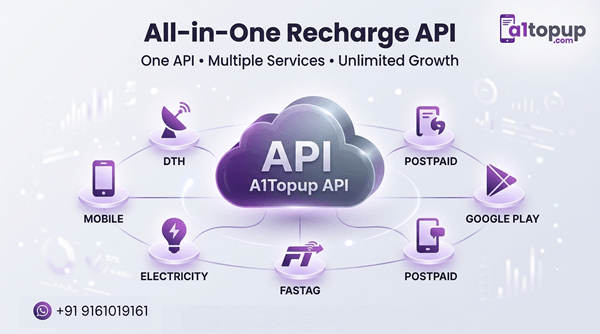
All-in-One Recharge API Solution 2026
Discover the all-in-one recharge API solution for 2026. Complete API platform for mobile, DTH, utility bills, insurance, and more. Single integration for all recharge services with high commissions.
Read more →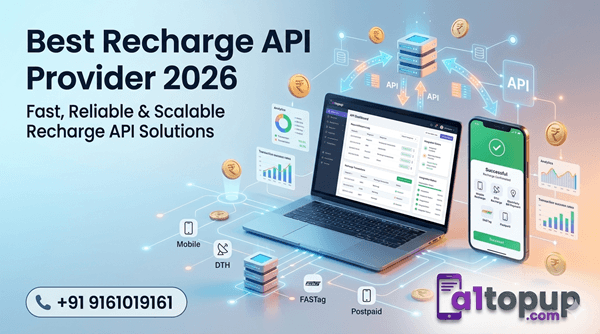
Best Recharge API Provider in 2026
Discover the best recharge API provider in 2026. Compare top 10 recharge APIs based on reliability, commissions, documentation, uptime, and integration support. Find the perfect API for your business.
Read more →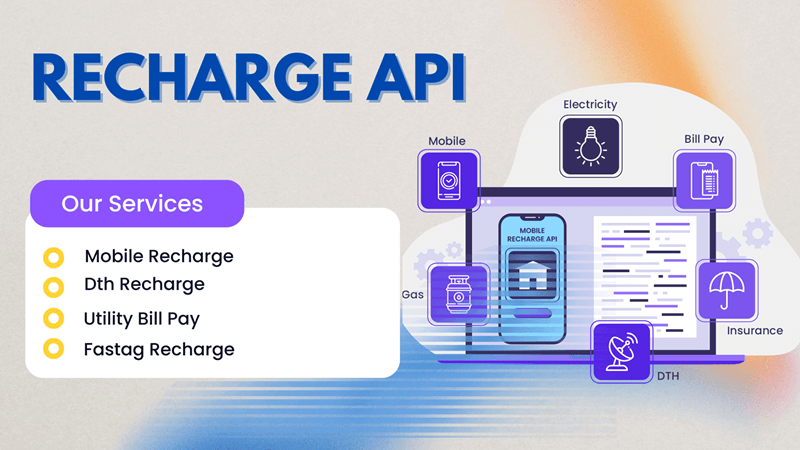
Recharge API: A Comprehensive Guide
Discover how mobile recharge APIs streamline operations, ensure secure transactions, and enhance efficiency in the recharge industry. Learn why they are essential for modern businesses.
Read more →