
Recharge Pending or Failed but Money Deducted? What Happens and What to Do
Key takeaways
- Pending means the final status has not arrived yet, not that money is lost
- Never repeat a pending recharge on the same number
- Use the transaction ID for every complaint
Few things worry a customer more than "money deducted, recharge not received". The good news: in most cases the amount either reaches the number or comes back. Here is what is happening behind the scenes.
Why a recharge goes pending
- The operator's system is slow or busy at that moment
- A network or connectivity delay between the platform and the operator
- Peak hours, such as the first days of the month
- Maintenance on the operator's side
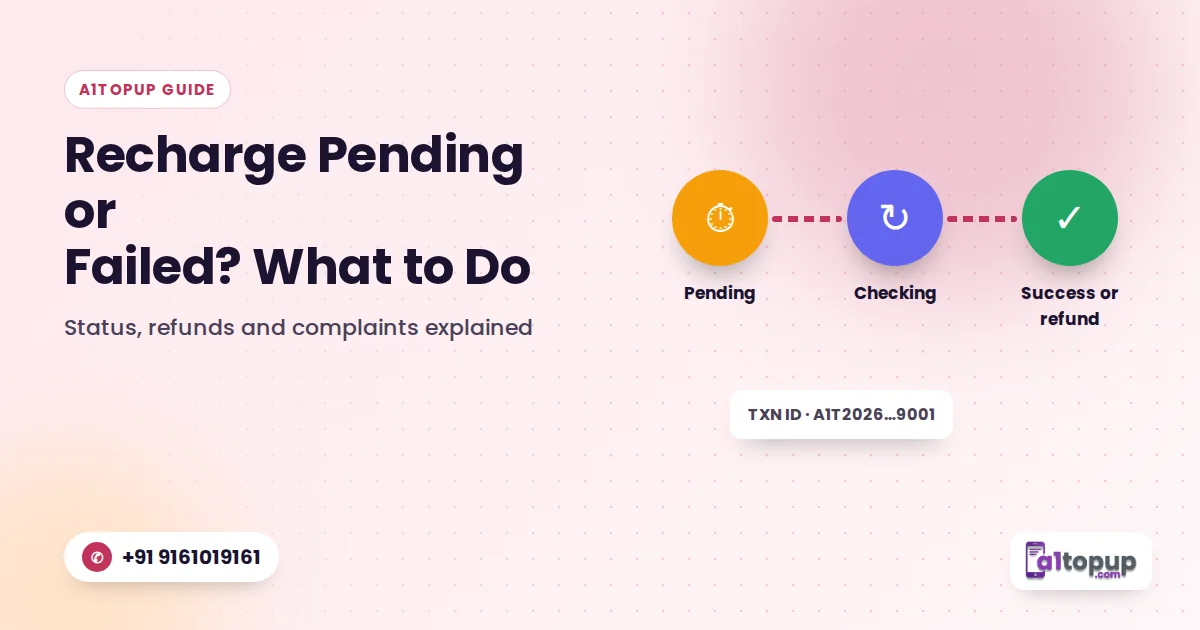
Pending means the final answer has not arrived yet. It does not mean the money is lost.
What happens next
| Final status | What happens to the money |
|---|---|
| Success | The recharge reaches the number (sometimes after a delay) |
| Failed | The amount is returned to the wallet as per the platform's refund process |
Business owners: use callback URLs so your system updates the final status automatically, without anyone checking manually.
What customers should do
- Wait a little and check for the operator's SMS.
- Check the balance or plan on the operator's app.
- Ask the shop or app for the transaction ID.
- If it is still pending, raise a complaint with that ID.
What retailers should do
- Do not recharge the same number again immediately; you may pay twice.
- Check the status in your app's report.
- Raise a complaint with the transaction ID if it stays pending.
- Tell the customer clearly when to expect an update.
What businesses and API users should do
Use callback URLs so your system receives the final status automatically, and show it to your users. Operator detection before payment also reduces wrong-operator failures; see the operator detection API.
How a good platform reduces pending cases
- Direct operator connectivity
- Multiple API routes, so one slow route does not stop everything
- Fast complaint handling and clear refund records
How to read transaction status
| Status | Meaning | What to do |
|---|---|---|
| Success | The operator confirmed the recharge | Nothing; share the transaction ID if asked |
| Pending | Final answer not received yet | Wait, do not repeat the recharge |
| Failed | The operator rejected it | Amount is returned as per the refund process |
Wrong number or wrong operator
A recharge sent to a wrong number that exists is usually successful for that number and cannot simply be reversed. Always confirm the number with the customer before you press recharge, and use operator detection where available.
Keep a record
For every complaint, note the mobile number, amount, time and transaction ID. Clear details let support trace the recharge quickly with the operator.
Conclusion
Pending is usually temporary. Wait, check, and use the transaction ID for any complaint. If you run a recharge business, choose a platform built to keep pending cases low, like our recharge API and recharge software.
Fewer pending recharges
Direct operator connectivity and callbacks built in.
Frequently asked questions
Why is my recharge pending?
Will I get my money back if a recharge fails?
Should I recharge again if it is pending?
Have a question? Talk to our team
Related articles

Recharge Software Source Code: Complete Customization
Get complete control with recharge software source code. Customize every aspect of your recharge business platform, from UI design to commission structures and business logic.
Read more →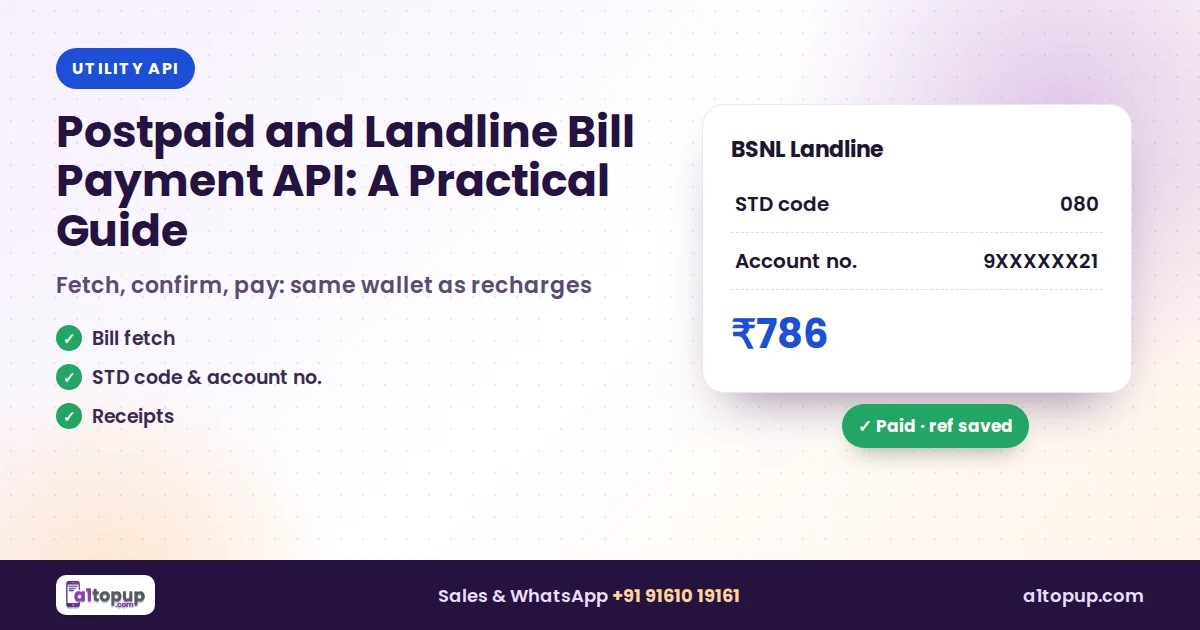
Postpaid and Landline Bill Payment API: A Practical Guide
Postpaid and landline bills need one or two extra fields. Here is how to get them right first time.
Read more →
How Much Does It Cost to Build a Recharge App? Build vs Buy
Building your own recharge app sounds cheaper until you list everything it needs. A plain comparison.
Read more →